Random Posts
-

Pedal Progression: 1 Range Master
In this series I revisit and re-build some of my favorite guitar pedals. Here a treble booster is given some of the best vintage parts […]
-

Homelab: 4 Family & apartment friendly server cabinet
Finding ways to live with an interest in computers can be a challenge. That is having half a dozen computers running 24/7 is not something […]
-

Pedal progression: 2 Suhr Riot
This another one that was pulled out of the drawers, a “amp in a box”, decent rock-box at least 15years ago, still today. Horrid drilling, […]
-

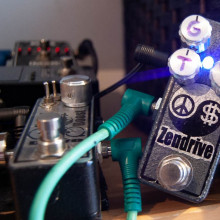
Pedal Progression: 3 Zendrive
This is another pedal from almost two decades ago, a Hermida zen drive, repairing and rebuilding with better parts. A great overdrive more body and […]
-

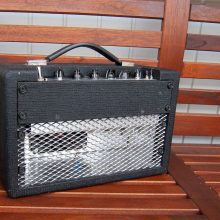
TrainWreck Rockette: 2 Headshell
A good find this old, 70’s VOX transistor amp, from my old music teacher no less, seems the perfect candidate for a Trainwreck build (a […]


Custom DDC: 1 Digital to Digital Converter; USB to l2s over HDMI; S/PDIF; AES
Digital to Digital Converter, this little DIY utility box provides a way to escape a number of digital issues impacting sound quality in hi-fi. It takes usb output from a main streaming system provides it’s own sound card, high quality clocks and splits the signal out to l2s over hdmi, spd/if over coaxial, optical or AES(balanced) connectors. Directly compared with the coaxial out of a streaming system into a dac immediately shows removal of a smearing of the audio, the DDC has more ‘blackness’ and separation around instruments and vocals. The DDC allows for enhanced clarity and focus of the audio likely due to noise carried in the ground connection and large amount of timing issues, jitter, due to bad quality basic clock of the system.
Why this is the expected result is found in a number of reasons, for one the coaxial and balanced out has isolating transformers, breaking the ground connection and therefore do not offer a pathway for digital noise to a downstream analog system. The l2s over hdmi allows for distributing the core digital signal to a dac able to, f.i. reclock it with a fifo system, thus let’s you eliminate ‘jitter’ Timing issues of the digital signal one of the main source damaging the audio in a digital source system, as these days most audio we listen too comes from a digital source, highly important. And importantly that same source of timing issues is also addressed by the Anamero sound card clocks far surpassing those present i the streaming system.
The main card provides a striped down but complete feature set as mentioned, it further allow for switching between the anamero usb card l2s socket and an additional l2s signal. Here the obvious plan is to add a Bluetooth module, allowing for LDAC, aptx HD etc Bluetooth protocols into a dac and preamp. Not seen on the stock photo my board also came with additional dip switches for various options of the l2s signal. I also hunted down an actually quiet 5V AC/DC supply specifically made for hi-fi, not neccesary an easy find, the Allo ‘Nirvana’ switching mode power supply. Happily the size just fits the smallest of a well respected and stylish hi-fi DIY case, the galaxy series of the ‘hi-fi 2000’ brand.
To help the board out beyond clean power l see the need to add a number of additional capacitor filtering, for instance 5V in only has a single 10uf cap, so I added another 220uf low esr electrolytic and 100nf film cap. Similarly the 3.3V rail only had a couple 10uf cos so paralell Ed then with 100nf caps, less important here since that rail only powers the switching and line stage in splitting out the signal. Instead the 3.3v power of the Anamero USB card gets 47uf low esr electrolytic and 100nf film cap for filtering.
Now moving on with more involved mods it did irk me that the USB card had to be powered by noise USB power, so using low voltage drop schottky diodes I implemented diode “OR-ing” this means connecting both the clean power of my separate supply as well as the USB power, however implementing diodes stops either power supply backfeeding the other, while still allowing for a USB connection between streaming system and the cars, so it van enumerate and be recognised. The result is that both supplies are avalible to the card and it will automatically pick the one with the highest voltage, happily the USB 5V is actually 4.89Volts and the Allo hifi supply is 5.18V so will get used pretty much always.
Next I implemented my own trigger system, I wanted the box to be able to automatically turn on when the streaming system turns on. I did this by including a 5V relay powered by the Allo supply but with a 5V sense pin connected to a split out 5V from the USB cable. Then I set the streaming system not to supply us power when un-powered. Adding 100uf and 100nf on power supply as well as implementing star grounding i the system should stop any theoretically possible chance of noise generated. Later I’ll also included a on-off-on toggle. Allowing for always on, always off, or automatic power, essential for the future when using a Bluetooth module which then does not neccessitate the streaming system being powered on, triggering the DDC.
Happily I also managed to find a power indicator matching the green of my main naim systems letting the box blend in seamlessly. Very happy with this, mainly for system hygiene I was much satisfied finding it on its own aiding the audio of my system substantially.